





Learning games sorted by age and skill
Children learn best when practice is short, playful and pitched at the right level. This page collects our games for children aged 3 to 12. Choose your child’s age above and you will see only the games that suit it, grouped by skill: math, words and letters, memory and focus, and logic.
Math games that follow one clear path
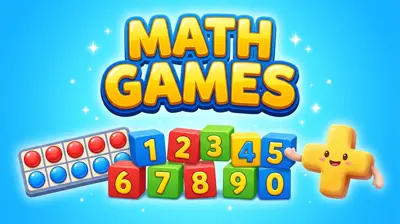
Our math games are built around one method, not a mix of tricks. They follow the order recommended by early math research, including the US What Works Clearinghouse guide Teaching Math to Young Children:
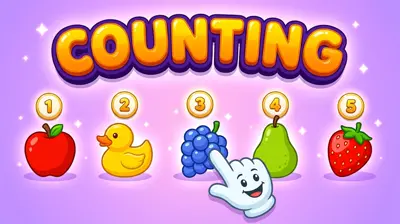
- Ages 3 to 5: counting games teach children to see small amounts, count one object at a time and compare groups.
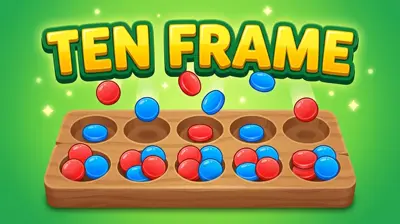
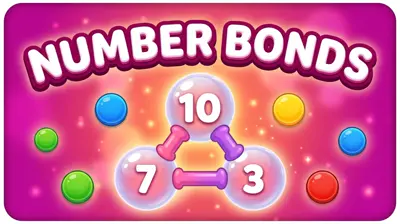
- Ages 5 to 6: the ten frame game and number bonds show numbers as five and some more, and the pairs that make 10.
- Ages 5 to 8: addition games move from counters to counting on, doubles and the make-ten strategy for sums to 20.
- Ages 6 to 8: subtraction games teach taking away and then subtraction as thinking addition.
- Ages 7 to 11: times tables and mental math build speed with multiplication and mixed sums.
Each step starts with counters, moves to pictures, and ends with numbers only. A wrong answer never ends the game: it shows the picture and a one-line tip, and your child tries again. The complete path is in Math Games for Kids.
Words, memory and logic
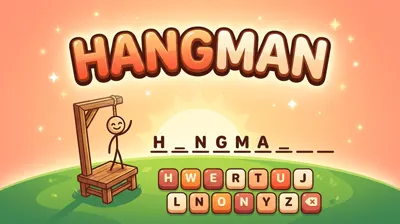
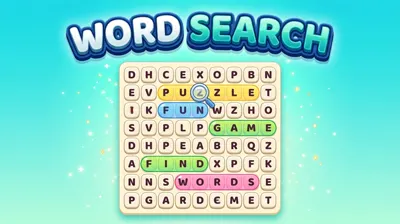
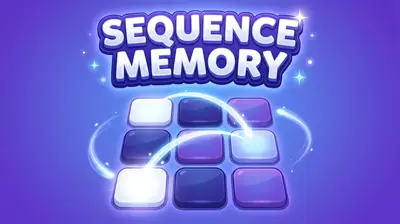
Beyond math, children can practise spelling with Hangman and Word Search, train attention with Memory Match and Sequence Memory, and enjoy calm logic puzzles like Water Sort and Tower of Hanoi.
Designed for young players
Big buttons that are easy to tap on a tablet, one task on screen at a time, clear pictures, sounds that can be turned off, and a pause menu. Short levels suit young attention spans, including children with ADHD, and progress is saved automatically so your child can come back tomorrow exactly where they stopped.
A tip for parents
Five or ten minutes a day works better than a long session at the weekend. Sit with your child for the first few levels, say the strategies out loud together, and use real objects at home, like grapes, spoons or toy cars, to practise the same ideas. Our guide on how to teach a child addition explains the method step by step.
Frequently asked questions
What are the best educational games for kids?
Games that practise one skill at a time, in a clear order, with instant feedback and short sessions. Our math games follow the order early math research recommends, from counting to subtraction within 20.
Which games suit a 4 or 5 year old?
Counting Games (seeing small numbers, counting and comparing), the Ten Frame Game and Memory Match. Pick ages 3 to 5 or 5 to 7 above to see them.
Which games suit kindergarten and first grade?
The Ten Frame Game, Number Bonds, Addition Games and Subtraction Games, which cover numbers and facts to 20, the main math goals of kindergarten and first grade.
Are these games good for children with ADHD?
They were designed to be ADHD-friendly, with short levels, one question at a time, instant feedback and no timers in the math games. They are learning games, not a treatment.
Are the kids games free and safe?
Yes. Every game is free and runs in the browser without an account, download or chat. Progress is saved only on your own device.