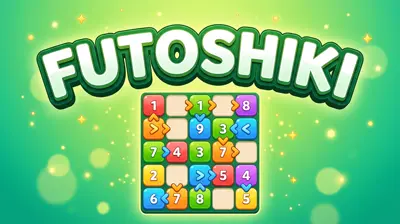
A number path puzzle you can play all day
The idea is simple. A grid holds every number from 1 to the last one, and each number sits right next to the one before it, so together they trace a single winding path. A few numbers are shown. Your job is to fill in the rest.
Newspaper versions of this puzzle come out once a day. Here you get as many as you want on three sizes, 5×5, 7×7 and 9×9, plus a daily board that is the same for everyone. Every grid has exactly one solution, and your progress is saved if you leave and come back.
How the path works
Moves are orthogonal: up, down, left or right, never diagonal. So 12 can sit above, below or beside 11 and 13, but not on a corner of them. The path never branches and never crosses itself, and when the grid is full it has visited every square once.
That single rule is what makes the puzzle work. Because the path cannot cut corners, the number of steps between two squares is easy to count, and counting is most of the strategy.
Strategy: gaps, corners and the checkerboard
Fill the tight gaps. Find two given numbers close in value. If 30 and 32 are both on the board, 31 must touch both of them, and usually only one square does. Gaps of two or three numbers come next. Each one you close makes the neighbouring gaps tighter.
Count moves, not squares. The fewest moves between two squares is the number of rows apart plus the number of columns apart. If 40 and 47 are exactly seven moves apart, the path between them has no room to wander, so it must take a straight or stair-step route. If they are five moves apart, the path has two spare steps and must make one small detour.
Use corners. A corner square touches only two others. If a corner is empty, the number in it must connect those two neighbours, which fixes the path through that corner. Edge squares have three neighbours and are the next easiest.
The checkerboard parity trick. Imagine the grid coloured like a chessboard. Every move goes to a square of the other colour, so the numbers alternate: odd, even, odd, even. That means all the odd numbers sit on one colour and all the even numbers on the other. On an odd-sized grid, such as 7×7, the colour with more squares holds the odd numbers, and both 1 and the last number sit on it. The board in this game is tinted in two shades so you can see this at a glance. Before you place a number, check that its colour matches the odd or even numbers already there.
Don’t trap a pocket. If the path seals off a group of empty squares that no remaining gap can reach, the puzzle cannot be finished. Glance at the empty areas after each long stretch.
Two ways to play
Drag from any number into empty squares and the next numbers appear as you go: drag from 5 and you lay 6, 7, 8. Drag back to take them off. You can also tap a square and type the number on the pad or keyboard. When a square is selected, small dots show where the next number can go, and the linked run of numbers through it lights up.
Undo, Erase and Hint sit at the bottom. The pause menu has Restart, New game, Show solution and the sound switch. The clock and your mistakes appear at the top, and your best time for each level is kept on this device.
Who it is for
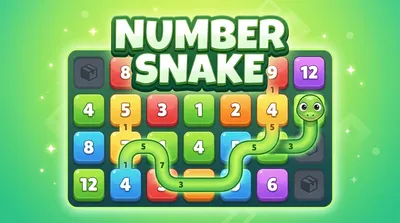
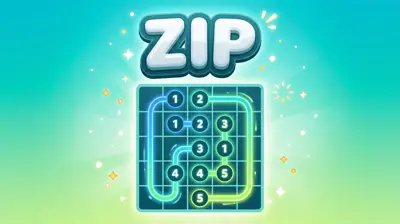
Number path puzzles need no arithmetic, only counting and a little planning, so they suit anyone who likes sudoku but wants something more visual. Start on 5×5 to learn the feel, move to 7×7 for the daily, and try 9×9 when the parity trick has become a habit. If you want diagonal moves too, try the Number Snake puzzle. For a puzzle about drawing one line through every square, play Zip.
How to play Number Path
- Fill every empty square with a number so the grid holds each number from 1 to the last one (25, 49 or 81) exactly once.
- Each number must sit next to the number before it and the number after it: directly above, below, left or right. Diagonals do not count.
- Together the numbers form one unbroken path that snakes through every square.
- Some numbers are given at the start and cannot be changed.
- Every puzzle has exactly one solution. A number that does not match it is refused and counts as a mistake.
Number Path tips
Bridge the short gaps first
Look for two given numbers that are close in value, like 14 and 17. The path between them has only two squares to fill and only a few routes fit. Short gaps often have a single answer, and every number you place shrinks the next gap.
Count the steps between two numbers
Count how many moves it takes to walk from one given number to another, going around the grid. If 20 and 26 are exactly six moves apart, the path between them must take the shortest route with no detours.
Use the checkerboard trick
Colour the grid like a chessboard. Every step changes colour, so odd numbers all land on one colour and even numbers on the other. The board here is tinted that way. If a square is the wrong colour for 31, 31 cannot go there.
Watch corners and edges
A corner square has only two neighbours, so the number in it must touch both of them. If a corner is empty, the path has to pass through it, and that often decides the numbers on either side.
Frequently asked questions
How do you solve a numbrix puzzle?
Start where the given numbers are close together, such as 8 and 10 with one empty square between them, and fill those gaps first. Then count the moves between further pairs to rule out squares that are too far away, and use the odd and even colours of the checkerboard to rule out more. Corners and edges have fewer neighbours, so the path through them is easier to see. Work outward from what you have placed until the path is complete.
What is the difference between numbrix and hidato?
Both ask you to place consecutive numbers that touch. In Numbrix the path moves only up, down, left or right, the grid is a full square, and 1 is not always shown. In Hidato the path may also move diagonally, the shape can have holes, and the first and last numbers are always given. Our Hidato-style version is the Number Snake puzzle.
How do I enter numbers?
Two ways. Press on a number and drag into empty squares to lay the next numbers one after another, like drawing a line. Or tap an empty square and type the number on the pad or your keyboard; it goes in as soon as no longer number is possible, or when you press the check key.
What counts as a mistake?
A number that differs from the puzzle's one solution. The square shakes, the number is not placed, and the mistake counter goes up. Hints place a correct number for you.
Is there a daily puzzle?
Yes. Pick Daily on the start card. Everyone gets the same 7×7 board for the day, and a new one appears at midnight UTC. The other levels give you as many puzzles as you like.
Is Numbrix a trademark?
Yes. Numbrix is a registered trademark of Athlon Sports Communications, Inc. This puzzle follows the same rules under a generic name, and MindedGames is not affiliated with Athlon or Parade.